
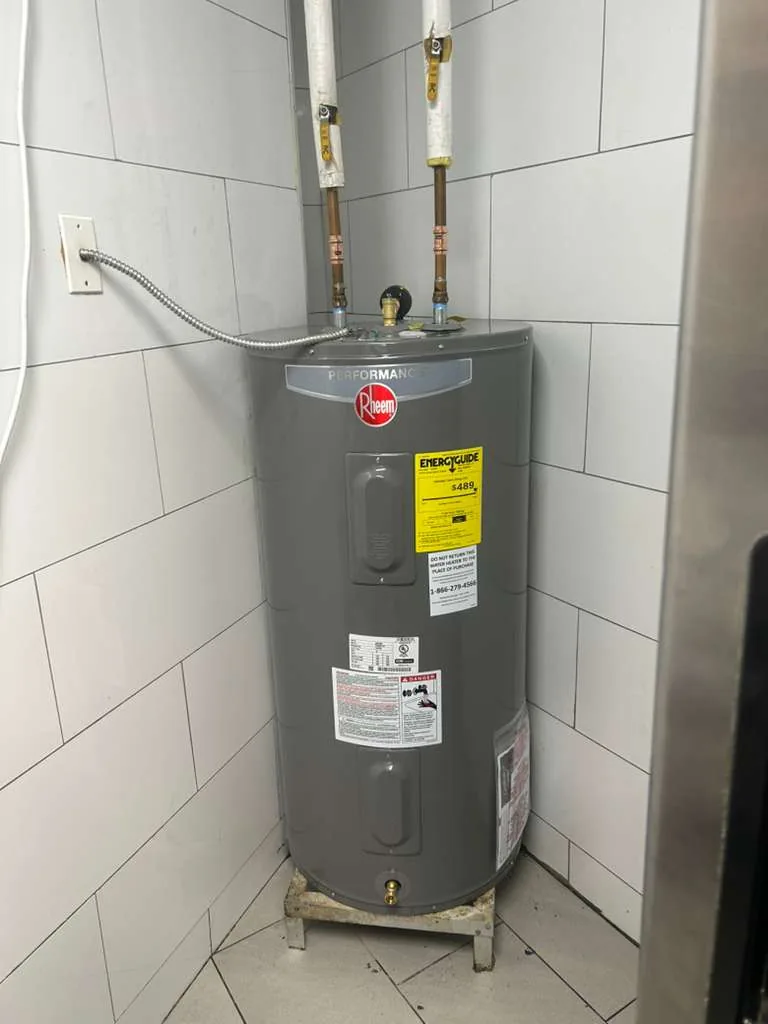
The decision to repair or replace a water heater depends on what has failed, the condition of the equipment and whether it meets your hot-water needs. Age helps frame the discussion, but it is not a diagnosis or a universal deadline. Start with an assessment of the fault before deciding on a replacement.
Identify What Is Actually Leaking or Failing
A leaking connection or replaceable component is different from a storage tank that has failed. A leaking tank generally requires replacement, while some control, valve or heating faults may be repairable. The equipment type and condition determine the available options.
A puddle alone does not establish its source. Avoid opening electrical covers, working on fuel connections or blocking a relief-valve outlet. If water is near electrical equipment, keep clear and arrange help. Read our water-heater warning signs for observations worth reporting.
Consider Condition and Repair History Together
Find the model, serial number and installation paperwork if available. Note previous repairs, recurring symptoms and maintenance history. A single repair on otherwise sound equipment is a different decision from repeated faults accompanied by deterioration.
Ask what the proposed repair addresses and what concerns would remain afterwards. A repair should not be presented as renewing the whole appliance or guaranteeing a particular remaining lifespan. Parts availability and any applicable manufacturer warranty are also worth checking.
Does the Heater Meet Your Needs?
Running out of hot water can reflect a fault, increased household demand or a system that is not suited to simultaneous use. Tell the plumber which fixtures are used together and whether the problem is new. Replacing a heater with a similar unit will not automatically solve a demand or distribution issue.
Tank and tankless equipment need different assessments. Moving from one type to another is not necessarily a direct swap: space, connections and the installation requirements of the selected model need checking. The photograph on this page shows a tank heater, not a tankless installation.
Compare the Full Proposals
- Repair: what fault is being addressed, which parts are included, and whether other problems remain.
- Replacement: the proposed type and capacity, installation work included, and how it addresses your household’s needs.
- Ongoing care: the manufacturer’s maintenance requirements and warranty conditions for either option.
Request an explanation of the scope rather than comparing a bare equipment price with a complete repair quote. There is no fixed repair-cost percentage that makes the decision right for every property.
Account for the Building
In an apartment, establish whether the heater serves only your unit or is part of a shared system. Coordinate access and any planned isolation with building management. Do not change shared equipment based on general online advice.
Barry Way Plumbing handles tank and tankless water-heater repairs, replacement and installation in Brooklyn, Queens, Manhattan and the Bronx. Call or send a message with the symptoms and model details to discuss the next step.