
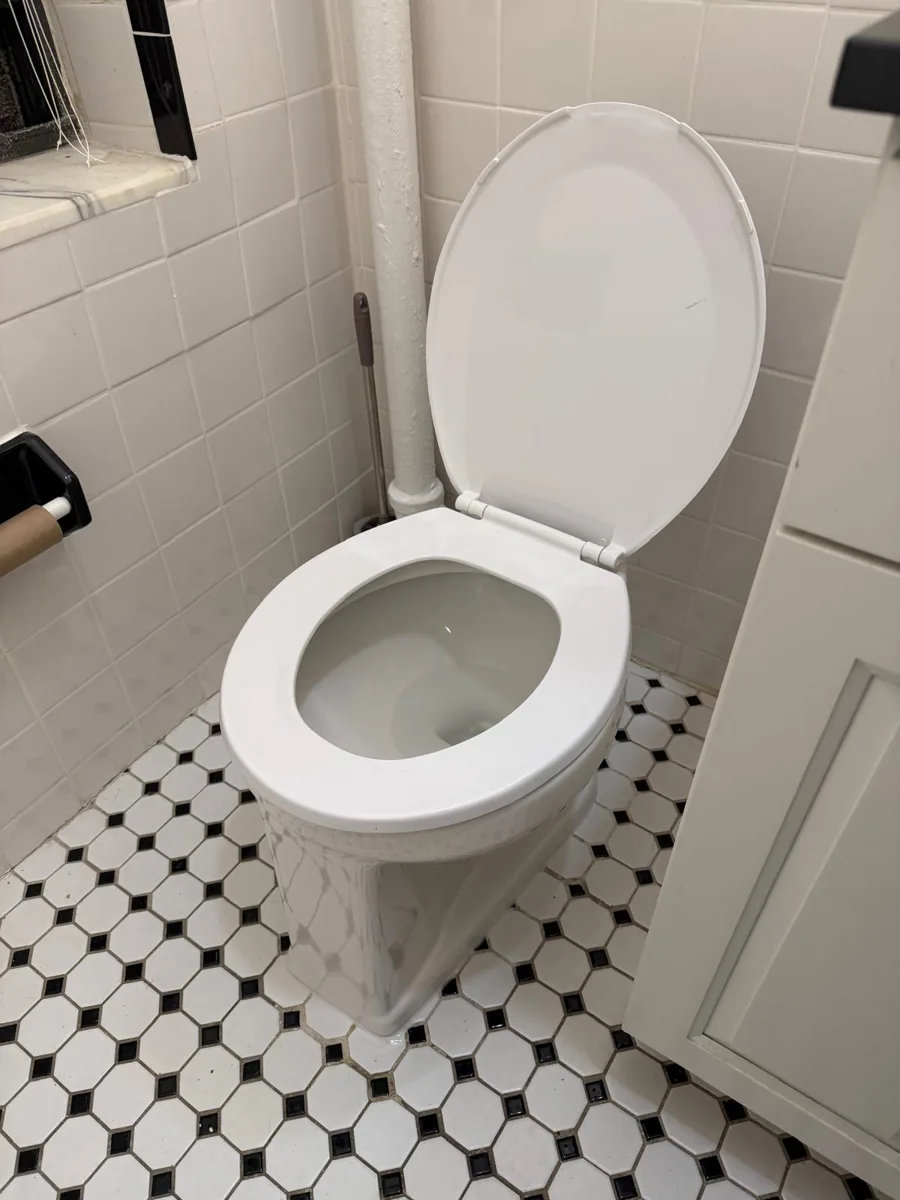
A toilet that continues running after a flush, or briefly refills when nobody has used it, is losing water or failing to stop filling normally. For a toilet with an accessible tank, start by observing the handle, water level and visible mechanism. You do not need to dismantle the toilet to gather useful information.
First Identify the Toilet Type
This guide covers toilets with a water tank. A toilet with an exposed flush valve and no tank has a different mechanism; do not apply flapper or float adjustments to it. Contact a plumber or building manager if you cannot identify the design.
For a tank toilet, carefully lift the lid only if it can be removed without tools and set it on a stable surface. Follow the manufacturer’s instructions for concealed or unusual designs rather than forcing a cover.
Does It Run Constantly or Refill in Bursts?
Continuous filling can involve the fill valve, float setting or a seal that is not closing. Brief refills between uses can mean water is escaping from the tank into the bowl. These patterns help narrow the investigation, but they do not identify which part should be replaced.
Check whether the handle returns freely after flushing. On models with a visible chain and flapper, note whether the chain appears caught or holds the flapper open. Some toilets use a different flush mechanism, so a generic flapper adjustment may not apply.
Check for a Hidden Tank-to-Bowl Leak
For an accessible tank, EPA WaterSense recommends a dye test: add a few drops of food coloring to the tank, wait 10 minutes without flushing, and check the bowl. Color in the bowl indicates a tank-to-bowl leak. Flush afterwards to avoid staining.
The result does not prove that the flapper is the only possible fault. Use the model’s troubleshooting instructions or have a plumber inspect the mechanism before buying replacement parts.
When to Arrange Help
Arrange repairs if the toilet keeps running after an obvious handle obstruction is cleared, water continually enters the overflow tube, or the cause is unclear. Do not bend parts or repeatedly change adjustments without the manufacturer’s instructions.
If water is leaking onto the floor or the bowl is rising toward overflow, stop flushing. Close the toilet’s supply only if its valve is safely accessible and operates normally. Do not force a stuck valve. In a shared building, contact management if isolation or access is uncertain.
Prepare for the Repair Visit
Note whether the problem is constant or intermittent, the toilet’s model if visible, and any recent changes. Mention water around the base separately from water running inside the bowl; they can involve different repairs.
Barry Way Plumbing provides toilet repairs and installation in Brooklyn, Queens, Manhattan and the Bronx. For broader routine checks, see our plumbing maintenance checklist.